
Activate
The caregiver discreetly initiates help and sees distinct local acceptance and confirmed platform receipt.
SOS Live for healthcare
Connect discreet staff duress, room and ward context, internal acknowledgement, clinical communication, and configured escalation across complex healthcare environments.
The operating challenge
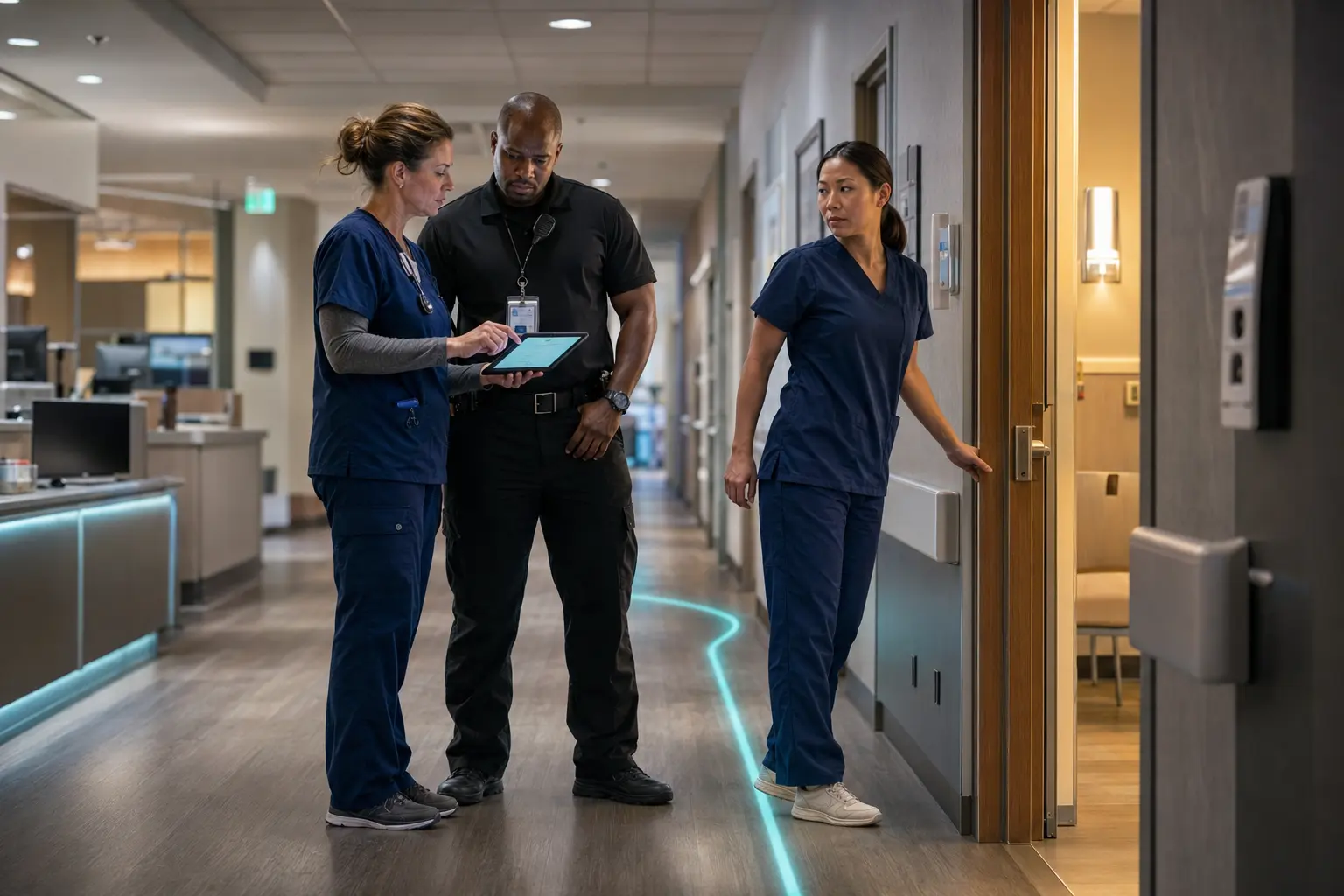
Clinicians and support staff may be mobile, gloved, isolated, or focused on a high-stress patient interaction. A general building address does not tell security which room, unit, wing, or floor needs help—and another phone call adds delay when seconds matter.
Representative workflow
A caregiver activates a LivePoint pendant or SOS Aegis workflow during a high-risk interaction. SOS Live creates one incident and gives designated teams the best available context to coordinate the next approved action.
The caregiver discreetly initiates help and sees distinct local acceptance and confirmed platform receipt.
LiveLocate provides the best supported room, zone, unit, or building context with confidence and source.
Hospital security or the designated clinical response role accepts ownership in SOS Aegis or LiveCommand.
LiveGrid, LiveUnity, and approved context keep security, nursing leadership, and operations aligned.
The response is closed with outcome, timeline, location history, and readiness evidence preserved for review.
Connected capabilities
SOS Live modules keep activation, location, response ownership, communication, readiness, and audit connected rather than creating another collection of isolated screens.
Role-aware mobile activation and purpose-built wearable or fixed duress options.
Indoor location determination and responder-ready tactical mapping.
Incident ownership, readiness, policy, reporting, and audit.
Internal communication and optional EMS or police integration where configured.
How SOS Live 2.0 fits
SOS Live 2.0 connects the full response lifecycle—from activation and policy to coordination, readiness, evidence, and approved escalation. Each capability can be configured around the people, risks, and operating model of this environment.
SOS Aegis and LivePoint provide mobile, wearable, and fixed activation options suited to clinical roles, behavioral-health environments, and isolated work areas.
LiveCommand brings identity, event type, response ownership, device state, communication, and outcome into one governed timeline.
LiveLocate, LiveGrid, LiveVision, and approved integrations can contribute room or unit context, movement, camera metadata, and relevant site information.
LiveUnity targets the correct internal roles, supports acknowledgement, and keeps nursing, security, facilities, and operations working from the same state.
LiveDispatch can send approved incident context to EMS, police, or other responders only where the healthcare organization has configured that workflow.
Deployment design
A strong design starts with roles, risks, policy, existing systems, and acceptance criteria—not a one-size-fits-all device count.
Build a better response
We’ll review priority events, mobile roles, units, floorplans, indoor coverage, internal response, and external escalation requirements.