
Activate
A wearable, fixed device, SOS Aegis, or connected system creates the incident.
SOS Live for enterprise + industrial
Create one operating picture across offices, warehouses, manufacturing environments, retail locations, and distributed facilities without forcing every site into the same response model.
The operating challenge
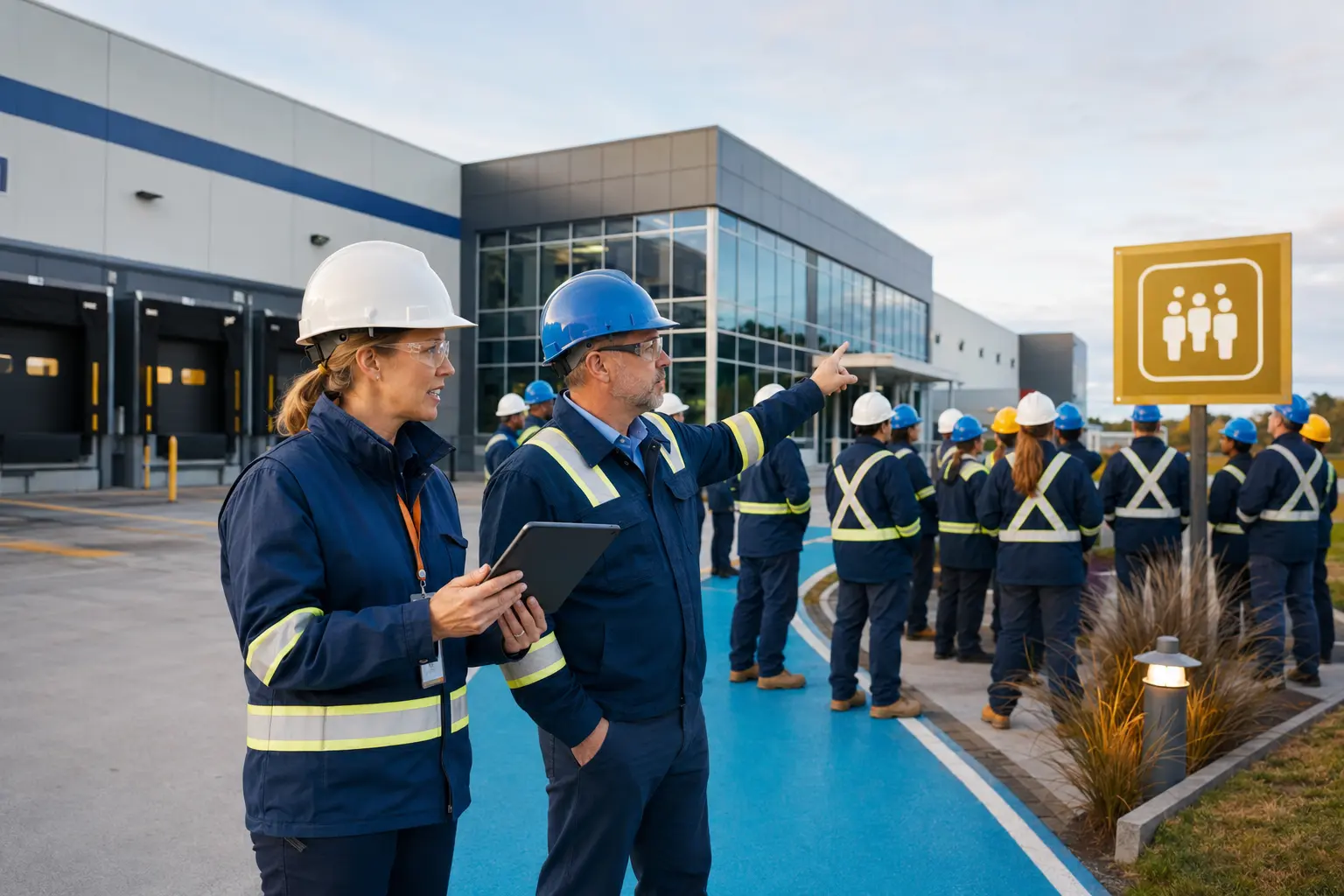
A worker may be isolated in a warehouse aisle, production area, parking lot, or remote office. Different sites have different layouts, shifts, response owners, hazards, and communication systems—yet leadership still needs consistent readiness and accountability.
Representative workflow
An employee initiates an alert in a mapped warehouse or manufacturing zone. SOS Live identifies the best supported location, assigns response ownership, and provides the operational context required by security and EHS.
A wearable, fixed device, SOS Aegis, or connected system creates the incident.
The platform selects the best supported building, level, production area, zone, or outdoor position.
Site policy targets the correct security, EHS, shift, or facilities audience.
The response owner acknowledges and works from one incident timeline and tactical map.
Leadership receives readiness and outcome evidence without exposing unnecessary sensitive detail.
Connected capabilities
SOS Live modules keep activation, location, response ownership, communication, readiness, and audit connected rather than creating another collection of isolated screens.
Activation options for fixed, mobile, and lone-worker roles.
Resilient site connectivity and sub-GHz coverage in complex facilities.
Mapped zone, building, floor, and movement context where supported.
Cross-site readiness, role-based routing, communication, reporting, and audit.
How SOS Live 2.0 fits
SOS Live 2.0 connects the full response lifecycle—from activation and policy to coordination, readiness, evidence, and approved escalation. Each capability can be configured around the people, risks, and operating model of this environment.
SOS Live provides one incident model, readiness view, audit structure, and role framework across offices, warehouses, manufacturing, retail, and remote sites.
LiveCommand policies can reflect local shifts, hazards, response owners, escalation rules, and facility layouts without forcing every location into one workflow.
Partner APIs, LiveVision, LiveLockdown, and approved integrations can add camera, sensor, access-control, building, signage, or environmental context.
LiveUnity and LiveCommand keep the assigned response roles, workforce communication, acknowledgements, and incident state connected.
Device health, mobile enrollment, tests, policy versions, integration results, and incident reporting give leadership evidence across the portfolio.
Deployment design
A strong design starts with roles, risks, policy, existing systems, and acceptance criteria—not a one-size-fits-all device count.
Build a better response
We’ll map facilities, workforce roles, shifts, internal response, hazards, integrations, and the location outcome required at each site.