
Activate
The employee discreetly presses a wearable or uses the enrolled SOS Aegis application.
SOS Live for hospitality
Protect housekeepers, engineers, security teams, and other mobile employees across guest floors, service corridors, back-of-house areas, parking facilities, and resort properties.
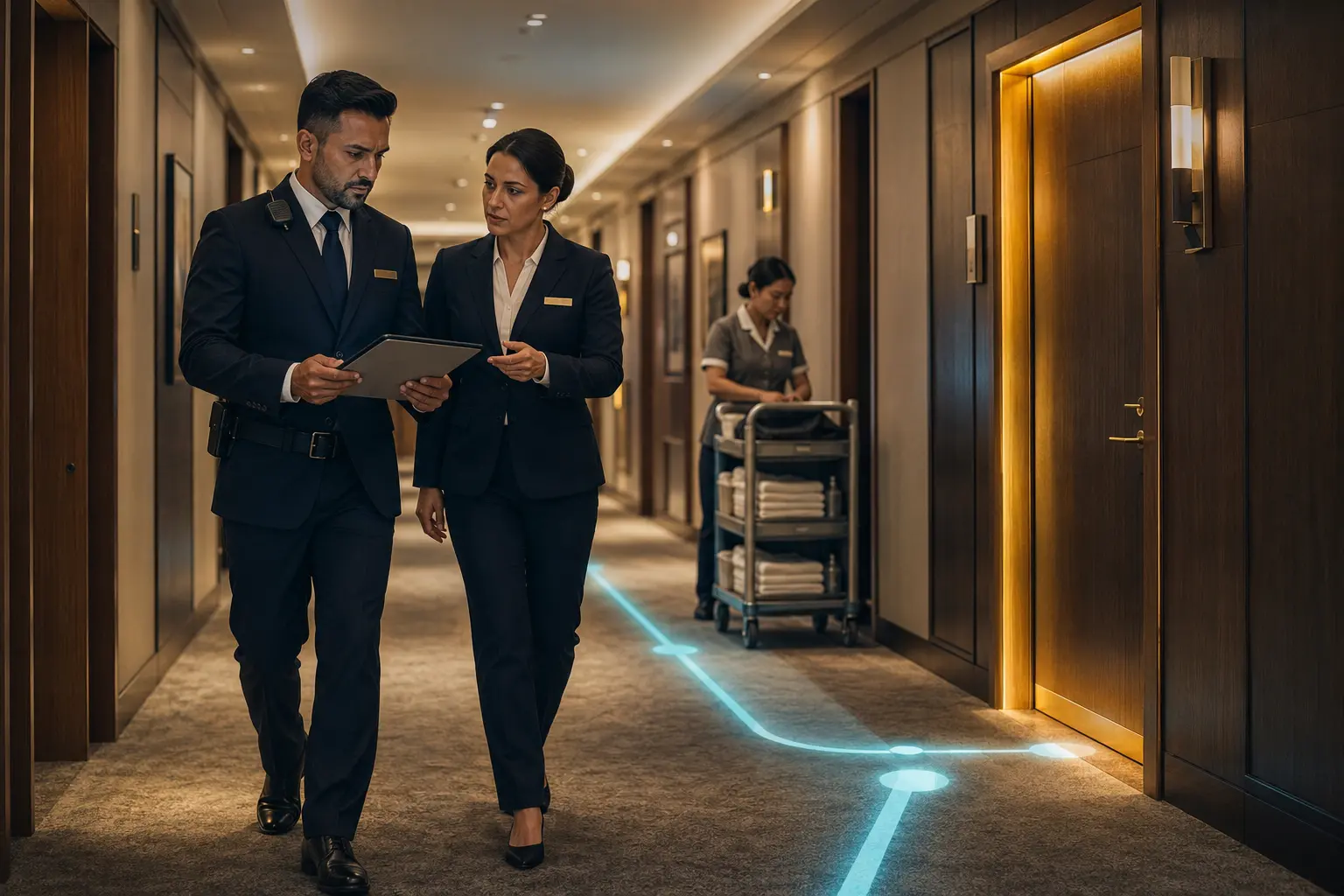
The operating challenge
Hospitality teams work behind closed doors, across multiple towers, and far from a fixed workstation. A room number may be unknown, a phone may be out of reach, and the first response usually belongs to hotel security and management—not an assumed external dispatch workflow.
Representative workflow
A housekeeper or service employee activates a wearable while moving through a hotel tower. The incident provides the best available floor and room or zone context, routes to hotel security, and updates as the worker moves.
The employee discreetly presses a wearable or uses the enrolled SOS Aegis application.
SOS Live returns the best supported tower, floor, room, or service-zone context.
Hotel security accepts the incident so management can see that response is underway.
Location source, confidence, freshness, and movement remain attached to the active timeline.
Security, the manager on duty, engineering, front desk, and optional responders share approved status.
Connected capabilities
SOS Live modules keep activation, location, response ownership, communication, readiness, and audit connected rather than creating another collection of isolated screens.
Mobile and purpose-built duress for a distributed workforce.
Indoor location and tactical hotel-floor context where supported.
Multi-property readiness, device health, incident operations, and reporting.
Targeted communication across security, managers, engineering, and front desk.
How SOS Live 2.0 fits
SOS Live 2.0 connects the full response lifecycle—from activation and policy to coordination, readiness, evidence, and approved escalation. Each capability can be configured around the people, risks, and operating model of this environment.
SOS Aegis and LivePoint give housekeepers, engineers, security, and other lone workers discreet ways to request help across guest-facing and back-of-house areas.
LiveCommand applies property policy and routes the incident to hotel security, the manager on duty, engineering, front desk, or another designated internal role.
LiveLocate and LiveGrid can provide the best supported property, tower, floor, room, service-zone, and movement context without overstating certainty.
LiveUnity gives the right teams a shared incident state, acknowledgement, updates, and safety checks without broadcasting unnecessary guest or employee detail.
LiveCommand monitors devices, mobile enrollment, permissions, tests, rules, and exceptions across one property or a multi-property portfolio.
Deployment design
A strong design starts with roles, risks, policy, existing systems, and acceptance criteria—not a one-size-fits-all device count.
Build a better response
We’ll review staff roles, towers, guest floors, service areas, response ownership, privacy, and location coverage requirements.